
In healthcare, trust has always been the first treatment. Long before a patient books an appointment, walks into a hospital, or chooses a diagnostic center, they make an emotional decision: Do I trust this brand with my health, my family, and my future?
For decades, this trust was built through reputation, referrals, and interactions. But today, the first touchpoint has shifted. Patients meet healthcare brands through screens and speakers on YouTube, Instagram, Spotify, Apple Podcasts, and even regional audio platforms.
This is not just a change in medium; it is a change in how trust is formed.
And amidst this transformation, video marketing and podcast advertising have emerged as the most powerful tools reshaping patient behaviour, brand authority, and the credibility of healthcare institutions.
Table of Contents
Over the past few years, we have watched patients evolve from passive readers to active seekers of clarity. They want to:
This shift birthed a new kind of healthcare engagement:
The rise of visual and vocal trust.
These are not trends; they are the new bridges of credibility.
Because patients trust what they can see.
Patients believe what they can hear.
And patients remember what feels personal.
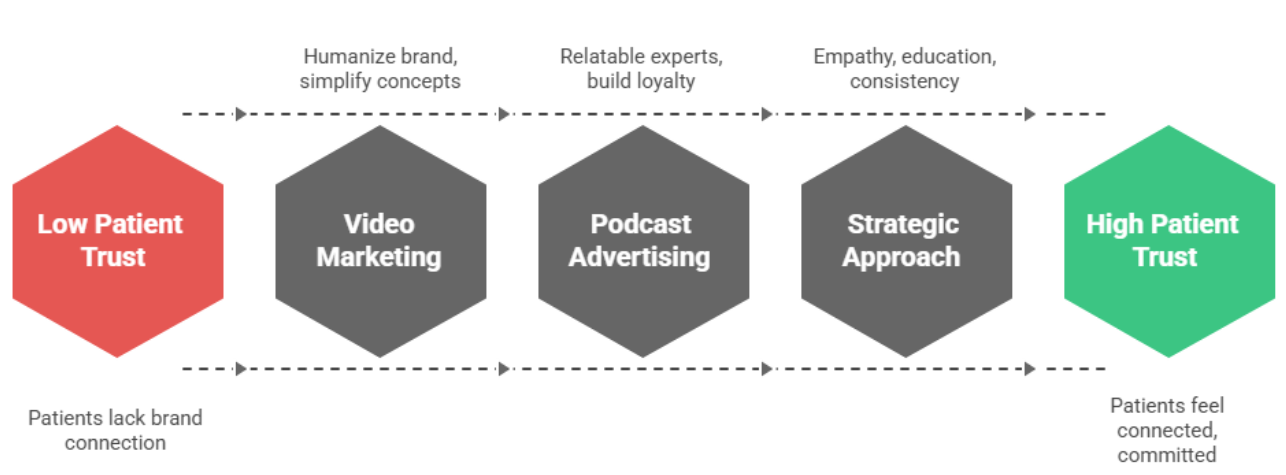
Healthcare decisions are emotional, vulnerable, and high-stakes. That is why video and audio formats work so well; they reduce anxiety and create familiarity.
Video bridges the biggest trust gap:
“I don’t know who you are yet.”
Podcasts create an environment where:
Podcasts build trust quietly, one authentic voice at a time.
A decade ago, the patient journey began with a Google search. Today, it begins much earlier.
A typical path:
Authority has shifted from static websites to dynamic storytelling.
Hospitals and healthcare brands are now investing in:
Each piece of content earns trust long before the first phone call.
Video has become one of the most influential tools in healthcare marketing for four reasons.
These help patients understand what they are signing up for.
These are far more persuasive than brochures.
High-quality videos create perceptions of:
In healthcare, showing is often believing.
Podcasts influence through proximity and intimacy.
A neurologist or cardiologist explaining conditions on a podcast feels approachable.
Podcasts engage during:
A series of episodes builds a relationship with the listener.
Hospitals, labs, and med-tech brands use podcasts to showcase:
Podcast listeners form deeper bonds with brands.
Across India, healthcare providers are rapidly embracing multimedia marketing:
India’s multilingual, mobile-first population engages deeply with visual and audio content, making multimedia the future of healthcare communication.
High-performing healthcare brands follow a clear strategy.
Address fear, confusion, and anxiety.
Explain:
Let medical professionals speak in their own voice.
One podcast episode can become:
Trust grows with frequent, valuable content.
When healthcare brands become storytellers:
In healthcare, trust does not create conversions; it creates commitment.
As healthcare becomes more digital, brands that communicate clearly and compassionately will lead both the patient’s mind and heart.
Video lets patients see who you are.
Podcasts let patients understand what you believe in.
Together, they make your brand unforgettable.
The question is no longer “Should we do video or podcasts?”
It is “What story will we tell, and why should patients trust us enough to listen?”
At Pixel Studios, this philosophy shapes every healthcare partnership we build. We help hospitals, diagnostic labs, wellness brands, and med-tech companies craft powerful video storytelling and multimedia ecosystems that elevate trust. We help healthcare brands conceptualize, script, produce, and launch their own branded podcasts that position their experts as trusted voices in the community.
Because in the future of healthcare marketing, trust is earned through voice, vision, and consistency, and that is exactly where Pixel Studios helps brands lead with confidence.
Video and podcasts help patients connect emotionally with healthcare providers before booking an appointment. These formats simplify information, build credibility, and make experts feel more approachable. As digital consumption grows, multimedia content has become central to patient trust and brand authority.
Videos turn complex medical information into simple, visual explanations. They let patients see doctors, understand procedures, and feel reassured about care. This clarity builds confidence and helps patients make decisions with less anxiety.
Podcasts create a personal connection through authentic, conversational expert voices. Patients listen longer, remember more, and trust the information they hear. This makes podcasts ideal for thought leadership, education, and long-term patient loyalty.
Healthcare brands should focus on patient questions, fears, and educational needs. From there, they can create explainer videos, expert interviews, stories, and multilingual podcast episodes. Repurposing this content across platforms ensures consistent visibility and better ROI.
Yes – regional-language content makes healthcare communication more relatable and culturally aligned. Patients trust doctors who speak their language and understand their context. This approach significantly boosts engagement across India’s diverse population.
How useful was this post?
Click on a star to rate it!
Average rating 4.6 / 5. Vote count: 9
No votes so far! Be the first to rate this post.