

In a connected manufacturing ecosystem, OEM leaders know that industrial buyers conduct deep digital research long before speaking to a sales team. The majority of the buying journey now happens online, shaping perceptions, shortlisting vendors, and building trust well in advance.
This shift has changed how demand is created in manufacturing. Isolated digital campaigns or one-off initiatives no longer influence decision-making at scale. What drives results is an integrated, omnichannel digital strategy that delivers consistent value across every touchpoint — from search and social to websites, content, automation, and paid media.
Table of Contents
Modern manufacturing buyers are highly informed, cautious, and driven by multiple digital touchpoints. They move seamlessly between platforms, devices, and content formats before making high-value purchasing decisions.
An effective omnichannel strategy is not about being everywhere. It is about being intentional, connected, and consistent.
SEO remains the foundation of digital visibility for manufacturing brands. OEM buyers search with technical and commercial intent, using keywords tied to specifications, applications, compliance, and industry use cases.
A strong SEO strategy focuses on:
When executed correctly, SEO attracts qualified traffic that aligns closely with real buying intent.
As AI-driven search and conversational engines influence how buyers discover information, manufacturers must optimize content for generative discovery.
Generative Engine Optimization ensures your brand:
OEM brands that invest early in GEO gain influence before vendor shortlists are even formed.
Manufacturing decision-makers actively consume content on professional and video-first platforms.
Social media enables:
Platforms like LinkedIn and YouTube play a key role in shaping how manufacturing expertise is perceived.
The website acts as the central nervous system of the omnichannel ecosystem. It must balance depth, usability, and clarity.
A high-performing OEM website should:
Design, content, and performance must work together to convert interest into engagement.
Email remains one of the most effective channels for nurturing long-cycle OEM leads when integrated with CRM systems.
Strategic email and CRM workflows help:
When aligned with content and automation, email becomes a trust-building channel, not just a follow-up tool.
Automation connects all omnichannel efforts into a cohesive experience.
Marketing automation enables OEMs to:
Automation ensures no opportunity is lost between touchpoints.
Paid media strengthens omnichannel execution by ensuring visibility at moments of high intent.
Strategic paid campaigns help:
When integrated correctly, paid media amplifies what is already working organically.
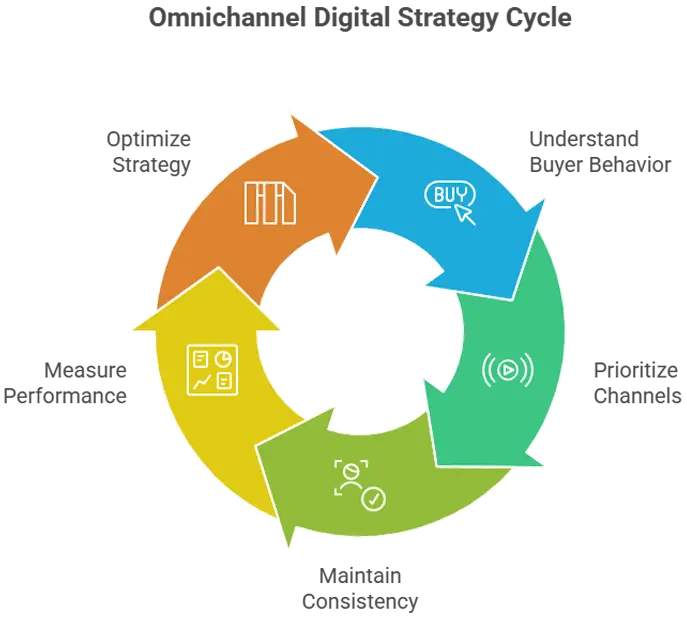
Omnichannel success depends on measurement, not assumptions.
A mature strategy includes:
Data connects strategy to outcomes and enables sustainable growth.
Success lies in orchestration, not channel volume.
High-performing OEM strategies follow a clear flow:
Omnichannel growth comes from alignment between platforms, teams, data, and goals.
Manufacturing brands that continue to operate disconnected digital initiatives risk losing relevance in a buyer-led market. Those that embrace omnichannel thinking build long-term visibility, credibility, and demand.
For OEM manufacturers, omnichannel is not a trend. It reflects how modern buyers research, evaluate, and decide
The future of manufacturing growth belongs to brands that communicate consistently, educate generously, and show up wherever their buyers are — with clarity and purpose.
At Pixel Studios, we help OEM manufacturers design and execute integrated omnichannel digital strategies that connect SEO, generative search optimization, social media, websites, automation, paid campaigns, and analytics into one cohesive growth engine. Our focus is not isolated campaigns, but long-term demand creation aligned with how industrial buyers actually behave.
Because in manufacturing, visibility builds credibility, consistency builds trust, and strategy builds sustainable growth.
An omnichannel digital strategy connects all digital touchpoints—search, website, social media, email, paid campaigns, and AI-driven discovery—into one cohesive experience. For OEMs, it ensures buyers receive consistent, credible information throughout long and complex decision cycles.
Manufacturing buyers research across multiple channels before engaging sales. Isolated campaigns create fragmented experiences, causing loss of trust and missed opportunities. Omnichannel strategies ensure visibility and relevance at every evaluation stage.
SEO attracts high-intent buyers searching for technical specifications, applications, and solutions. By aligning content with engineering and procurement intent, OEMs generate qualified leads early in the buying journey.
GEO ensures OEM content appears in AI-generated answers and conversational search results. As decision-makers increasingly rely on AI tools for research, GEO helps manufacturers influence vendor shortlists earlier.
SEO, websites, LinkedIn, YouTube, email nurturing, paid search, and marketing automation form the core. The priority depends on buyer behavior, industry complexity, and sales cycle length rather than channel popularity.
The website acts as the central hub where all channels converge. A well-structured OEM website supports technical depth, stakeholder-specific content, AI discovery, and lead nurturing without overwhelming users.
Success is measured by cross-channel engagement, lead quality, conversion paths, and pipeline influence. Tracking how channels work together-ather than in isolation-provides true insight into growth impact.
How useful was this post?
Click on a star to rate it!
Average rating 4.6 / 5. Vote count: 10
No votes so far! Be the first to rate this post.