
Table of Contents
Most businesses are active on social media. Very few are getting meaningful commercial returns from it.
The gap is rarely about budget or effort. It is about approach. The most common social media mistakes are not technical failures. They are strategic ones, and they repeat across industries, company sizes, and platforms with remarkable consistency.
Understanding what these mistakes are, and more importantly why they happen, is the fastest route to fixing them.
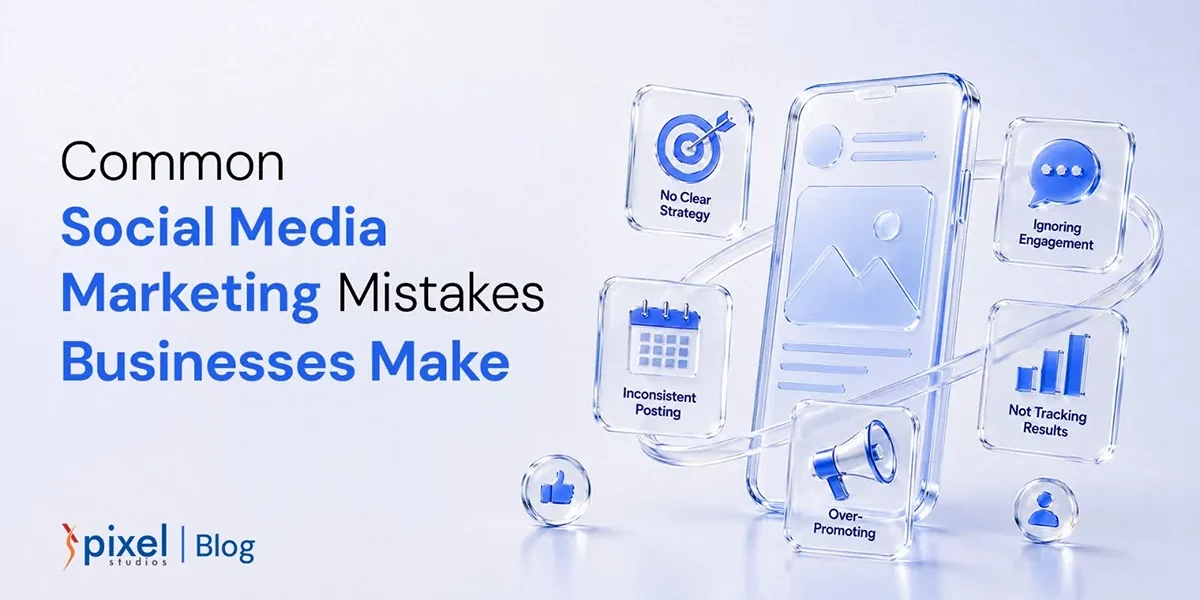
The most widespread social media mistake is treating posting as the goal rather than the means to one.
When a business asks “what should we post this week?” before asking “what do we want social media to do for our business?”, the content that follows is almost always disconnected from commercial outcomes. It fills a calendar. It does not build pipeline.
Every social media programme needs a clear answer to:
Without these answers, social media becomes an activity rather than a strategy. Activity without strategy is one of the most expensive ways to spend a marketing budget.
Most businesses invest their social media effort in company pages. On LinkedIn particularly, this is a significant strategic error.
The data is clear:
Buyers trust people. They follow people. They engage with people. A company page announcement reaches a fraction of the audience that a founder or senior leader’s personal post reaches.
The most effective social media marketing strategies in 2026 put expert-led personal content at the centre and use company pages for reinforcement, not primary distribution.
Different platforms serve different audiences with different content expectations and different algorithmic behaviours. Content that performs well on LinkedIn rarely performs well on Instagram. Short-form video optimised for TikTok needs a different structure than YouTube Shorts. Twitter/X rewards brevity and sharp takes. Facebook rewards community-building and discussion.
Businesses that repurpose identical content across every platform without adaptation are not saving time efficiently. They are diluting impact across all channels simultaneously.
The fix is straightforward:
Follower counts, impressions, and likes are easy to report and hard to connect to revenue. This makes them attractive to include in marketing dashboards and dangerous to optimise for.
A post that reaches 50,000 people and generates no qualified leads has not performed well. A post that reaches 500 people and generates three inbound enquiries from ideal prospects has performed extremely well.
The metrics that actually matter for social media commercial performance:
Connecting social media marketing measurement to these outcomes changes the strategic decisions that follow.
Consistency is the single most important variable in social media performance that most businesses underinvest in. Platforms reward accounts that post regularly. Audiences build familiarity through repeated exposure. Algorithms distribute content from active accounts more generously than from intermittent ones.
The pattern most businesses fall into:
This stop-start pattern produces no compounding. It resets audience familiarity and algorithmic momentum every time it happens.
The solution is a content system, not more motivation:
Social media is a two-way channel. Brands that publish and do not engage are leaving the most valuable part of the platform unused.
Comments are where trust is built, where objections are addressed, and where the algorithm decides whether to distribute content more widely. Early, genuine engagement in the comment section signals to the platform that the content is worth showing to more people.
More importantly, buyers who comment on content are self-identifying as engaged prospects. A brand that responds thoughtfully to every comment is doing sales work at zero marginal cost.
Social media does not work as a standalone channel. It works as part of a coordinated digital marketing strategy where each channel reinforces the others.
When social media content covers the same topics as the SEO content strategy, it builds topical authority across both channels simultaneously. When social posts link to high-value content assets, they drive qualified traffic to owned channels. When social listening informs content strategy, the resulting content is more relevant to the audience it is trying to reach.
Businesses that run social in isolation from SEO, content marketing, and branding miss the compounding effect that comes from integration.
Most businesses look active on social. Fewer are actually growing through it.
The gap between the two is almost always strategic. Fixing the mistakes above does not require more budget or more content. It requires clearer objectives, better measurement, and a system that makes consistency achievable rather than aspirational.
At Pixel Studios, we build social media marketing strategies that are designed around commercial outcomes from the start. From content strategy and expert-led LinkedIn programmes to paid social and digital branding, we help businesses turn social presence into pipeline. If your social media is active but not converting, we would love to show you why and what to do about it.
How useful was this post?
Click on a star to rate it!
Average rating 4.6 / 5. Vote count: 11
No votes so far! Be the first to rate this post.