
Table of Contents
Ad costs are rising. That much is not news. But the more important shift is what is happening on the buyer’s side. Decision-makers, particularly in B2B and high-value categories, are developing a much stronger filter for paid messaging. They scroll past sponsored posts. They skip display ads. They have trained themselves to look for signals of genuine credibility rather than brands that are simply paying for visibility.
This is audience fatigue meeting rising CPCs, and the combination is quietly eroding the return on paid advertising for various businesses. Cost per lead is climbing. Conversion rates from paid channels are softening. And yet the brands that have invested in building real digital authority are largely insulated from these trends because their growth does not depend on winning an ad auction every single day.
The question for any founder, CEO, or CMO planning their 2026 growth strategy is straightforward: how much of your visibility would survive if you stopped your paid campaigns tomorrow? If the honest answer is very little, that is a strategic risk worth addressing now.
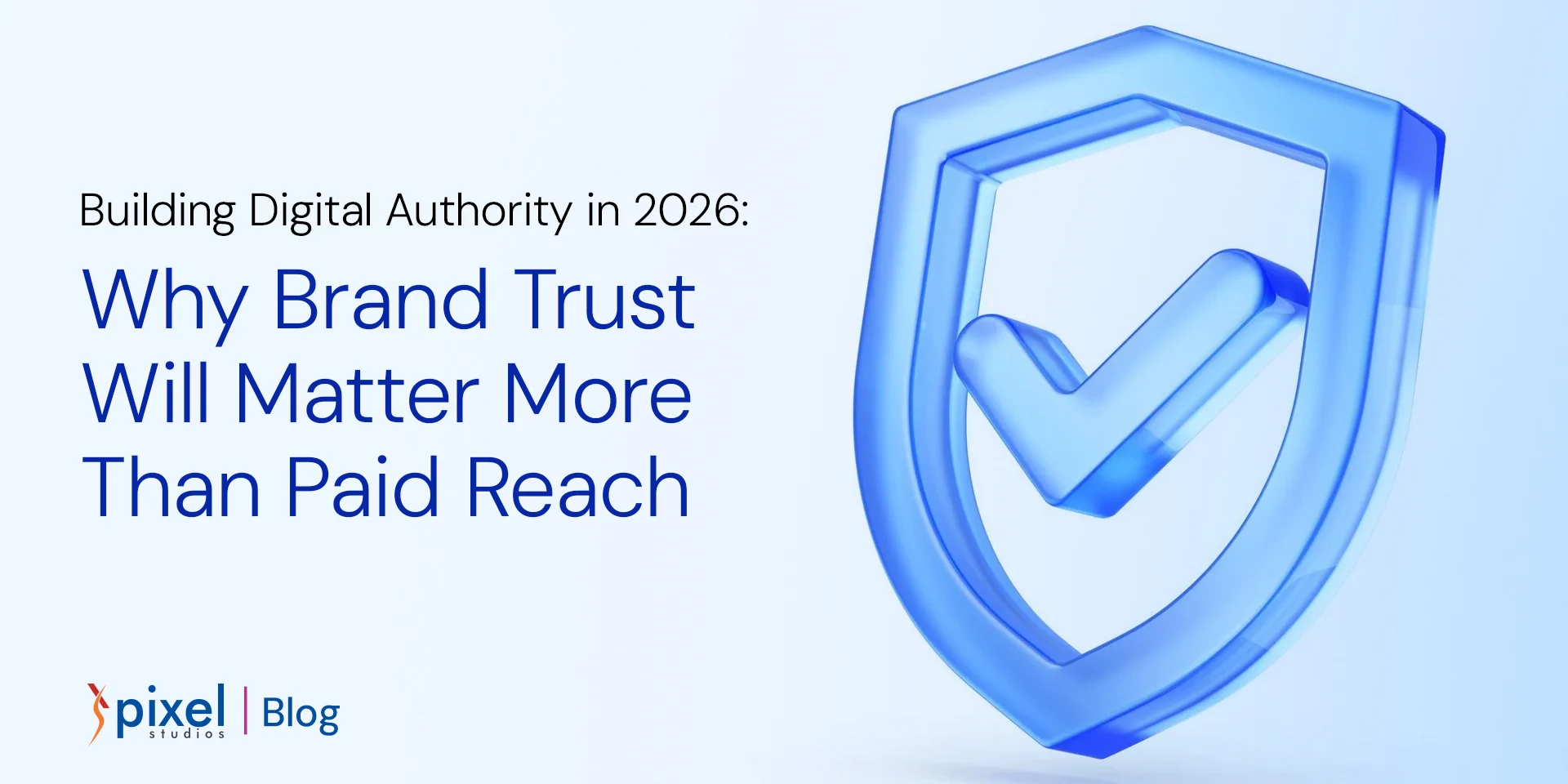
Trust has always mattered in business. But in 2026, it has become a measurable commercial asset that is hard to ignore. Buyers have more options, more information, and more scepticism than at any point before. When they are evaluating vendors or partners, especially at higher price points, trust is often the deciding factor between two otherwise comparable options.
Brand trust is built through consistent visibility in the right places, credible third-party validation, and a track record of content and thought leadership that demonstrates genuine expertise. It is the accumulated result of showing up repeatedly, saying useful things, and being recognised by others in your industry as a brand worth paying attention to. That kind of credibility has real commercial value that cannot be bought outright.
Senior buyers do not make decisions based on a single ad impression. Before they ever contact a business, most have already done significant independent research. They have searched for your brand on Google. They have looked at your LinkedIn presence. They have checked your reviews on platforms like G2 or Clutch. They have read your content or watched your videos. And increasingly in 2026, they have asked an AI tool whether your brand comes up as a credible option in your category.
What they are doing in all of these steps is assessing authority. They want to know whether your brand is genuinely established in its field or is simply spending money to appear that way. The brands that pass this evaluation have invested in the right places. They have strong organic search visibility. Their leadership team has a visible and credible presence. Their reputation is reinforced by authentic customer feedback, while their content addresses the questions buyers genuinely want answered.
Content marketing and SEO are the foundation of organic authority. When done well, they create a compounding asset that grows in value over time. Every article that earns a top search engine ranking, every guide that gets cited by other sites, and every piece of thought leadership that earns shares and backlinks is adding to a visibility infrastructure that works continuously without ongoing ad spend.
A strong content and SEO strategy for authority building focuses on a few key areas:
Businesses that invest in SEO services and content marketing today are building an asset that continues to generate qualified traffic and inbound leads long after the initial investment.
AI search tools like ChatGPT, Gemini, and Perplexity are changing how buyers discover brands. When someone asks an AI platform for the best digital marketing agency, the best SEO company, or the best content strategy partner in their space, the answer is not pulled from a paid ad. It is synthesised from authoritative content across the web, weighted heavily toward brands that have established genuine credibility through consistent publishing, strong backlink profiles, and positive third-party mentions.
This means that answer engine optimisation and generative engine optimisation are quickly becoming essential components of any modern brand visibility strategy. Brands that are not actively working to appear in AI-generated answers are invisible at the very first stage of the buyer’s research journey, before they have even formed a shortlist.
Digital authority is not built in one place. It is the result of a consistent presence across the channels that matter to your buyers. That typically means strong organic search visibility, an active and credible LinkedIn presence, a reputation backed by third-party reviews, and a content footprint that spans formats and platforms.
The most effective multi-channel authority strategies combine:
Paid advertising solves a visibility problem in the short term. It does not solve a trust problem. A buyer who sees your paid ad but finds no organic presence, no meaningful reviews, and no credible content when they search your brand name will not convert at the same rate as one who finds all of those things. The ad got their attention. The lack of authority lost the sale.
High-spend advertising also carries a compounding cost problem. As competition for the same keywords increases, CPCs rise, and the return on each pound or dollar spent gradually decreases. Organic authority, by contrast, does not get more expensive over time. Once earned, a top search ranking, a strong review profile, or an AI recommendation continues to deliver value at zero marginal cost.
The most strategically advantaged businesses in any competitive category are the ones with strong organic authority. They show up at the top of search results for commercial intent keywords. They get recommended by AI tools. Their brand is recognised and trusted before a sales conversation begins. As a result, their paid advertising works harder because it is reinforcing an existing positive impression rather than creating one from scratch.
These brands with strong authority often achieve higher conversion rates and lower customer acquisition costs, even with significantly lower ad spend than their competitors. This advantage stems from trust built through organic channels, a strategic asset that takes time to develop but is difficult for competitors to replicate.
Paid reach will always have a role in a balanced growth strategy. But in 2026, the brands that are building the most durable competitive positions are the ones treating digital authority as infrastructure, something you invest in consistently because it underpins everything else you do commercially.
Brand trust is not a soft metric. It is a revenue driver. It shortens sales cycles, improves conversion rates, lowers acquisition costs, and makes your paid advertising more effective. The businesses that invest in building brand authority now will be far better positioned two years from today than those that delay until increasing advertising costs make it a necessity.
At Pixel Studios, we help businesses build the digital authority that drives sustainable growth. From SEO services and content marketing strategy to digital PR and social media marketing, we build the visibility systems that make your brand the most trusted option in your market. If you are ready to move from paying attention to earning it, we would love to talk.
How useful was this post?
Click on a star to rate it!
Average rating 4.6 / 5. Vote count: 10
No votes so far! Be the first to rate this post.

After a brief stint with a company I hugely admire, Tata Motors, my entrepreneurship journey began with an Aptech Franchise in Chennai. In a couple of years, I started Pixel Studios, where I combined my deep passion for technology with innate sparks of creativity. Over the next 20+ years, Pixel Studios has branched into areas, with Design + Technology at its core. Right now, the Pixel team is servicing clients across India & abroad in areas involving Design, to enhance their user experiences. Visit www.pixel-studios.com Over the course of my professional life, I have nurtured interests in Leadership, Strategic Thinking, Creative Thinking, Team Building, Digital Marketing, NLP, Training etc. in my pursuit for active learning and curious experimentation.
View all posts